
When you throw away edible food, you throw away money. Shop smarter, save money, and work efficiently in your kitchen with this no food waste meal plan.
According to the USDA, more than one third of all available food goes uneaten through loss and waste. That’s an estimated 133 billion pounds of food!
Food loss is largely attributed to spoilage. However, in the United States, most food waste is on the consumer end of things. That means consumers aren’t choosing produce that might have a blemish, or they are throwing away food because they helped themselves to too large a serving.
When you throw away food, you are throwing away money. And when in March 2026 almost half of American families are saying it’s a struggle to afford food we can’t afford to be wasteful with our food and money!
That’s why I created this 7-day, no-waste meal plan.
Pin this post for later!
Photo by The Blowup via Unsplash.
Why Try a No Food Waste Meal Plan?
If you have been around this blog for any amount of time, you know that I love to manage my money well. I don’t believe that frugal means cheap. I do believe that we should steward our resources well. And when it comes to groceries, that means doing a bit of research to make sure we are getting the most bang for our buck.
When we say we don’t want to eat the food we bought with money we worked hard to earn, I believe we are doing ourselves a disservice.
We are discrediting the work we do to earn our money. We are spending countless hours grocery shopping and making food just to throw it all away. And we are committed to repeating this wasteful cycle over and over and over again.
I don’t know about you. But the last thing I want to do is waste my time and money. I don’t want to be a slave to meal prepping just to waste it.
That’s where going for no food waste comes in. Keep reading for my meal plan and even more cost savings tips.
Pin this post for later!
Photo by Salah Ait Mokhtar via Unsplash.
Table of Contents
FREE Guide – How to Stock a Pantry on a Budget
$5 How to Stock a Pantry (Even More Tips!)
Seven Day No Food Waste Meal Plan
This grocery list is made up of building blocks you can use to make all kinds of different meals. You can make so many swaps to things like produce and spices and have an entirely new list of weekly meals.
Seven-Day Menu
Sunday
Pancakes
Leftovers
Crockpot whole chicken with vegetables and rolls (We served this with a salad)
Snack – grapes and chopped carrots
Monday
Yogurt fruit parfaits
Sandwiches with grapes and carrots
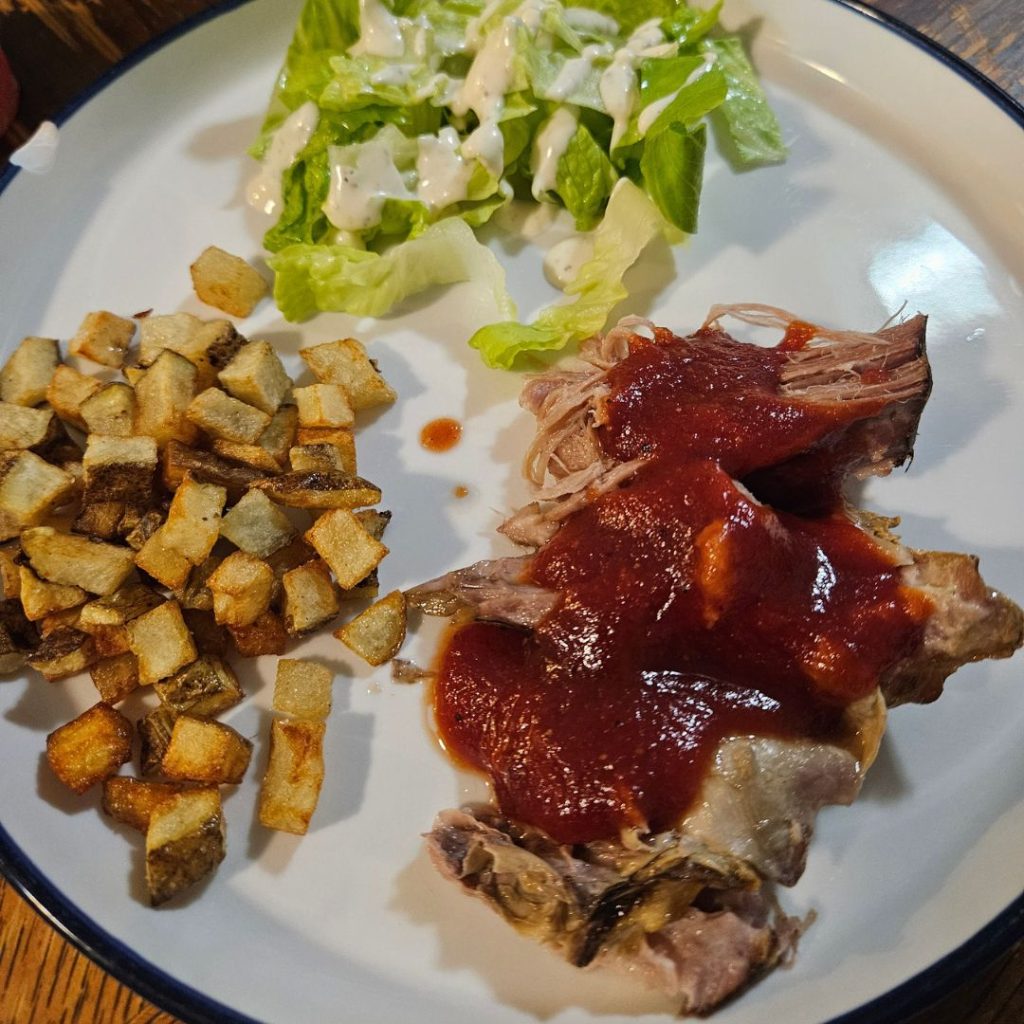
Pulled pork sandwiches with coleslaw
Tuesday
Toast and eggs
Pulled pork sandwiches (on rolls from Sunday)
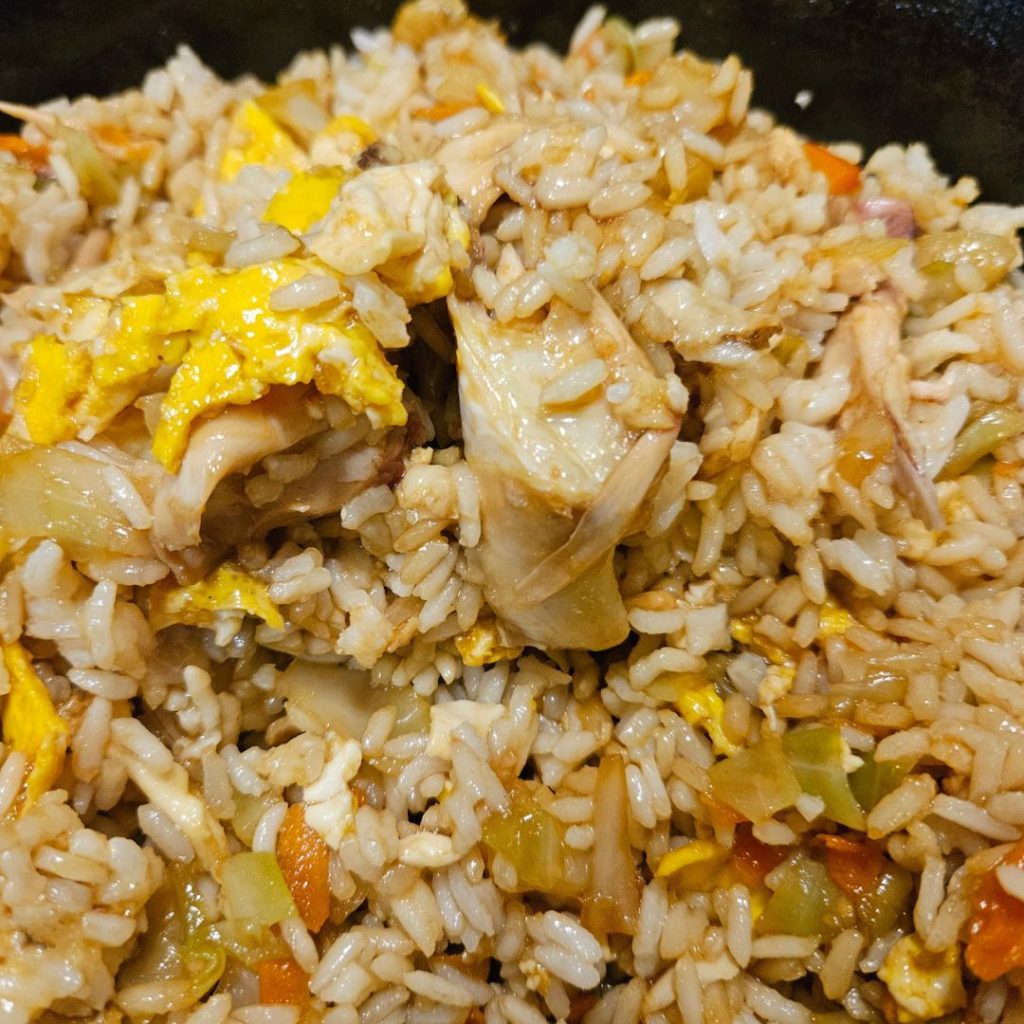
Chicken fried rice with carrots and cabbage (Start some chicken broth in a crockpot for tomorrow night’s dinner! Throw your chicken carcass, water, and some apple cider vinegar in to your crock pot. Set it on low for 24 hours and strain it when you’re ready to use).
Wednesday
Granola and yogurt parfaits
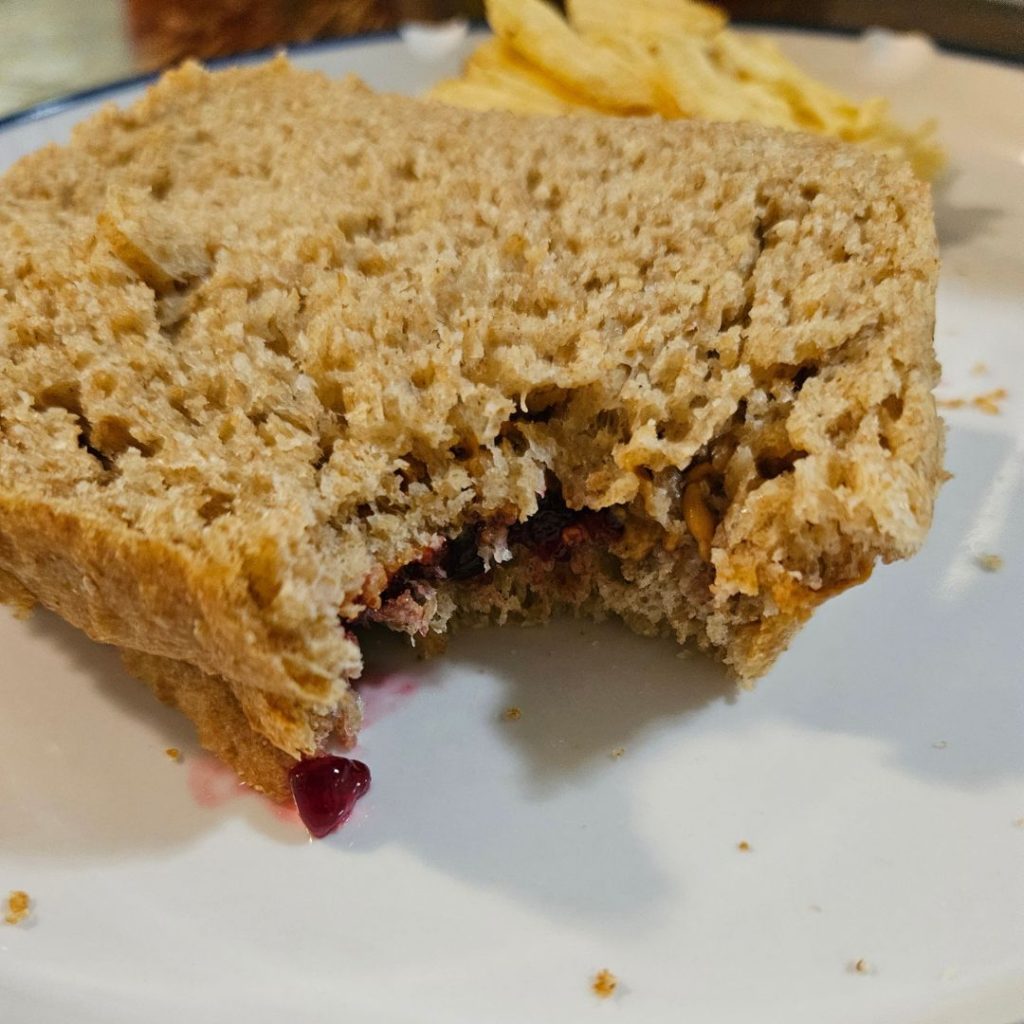
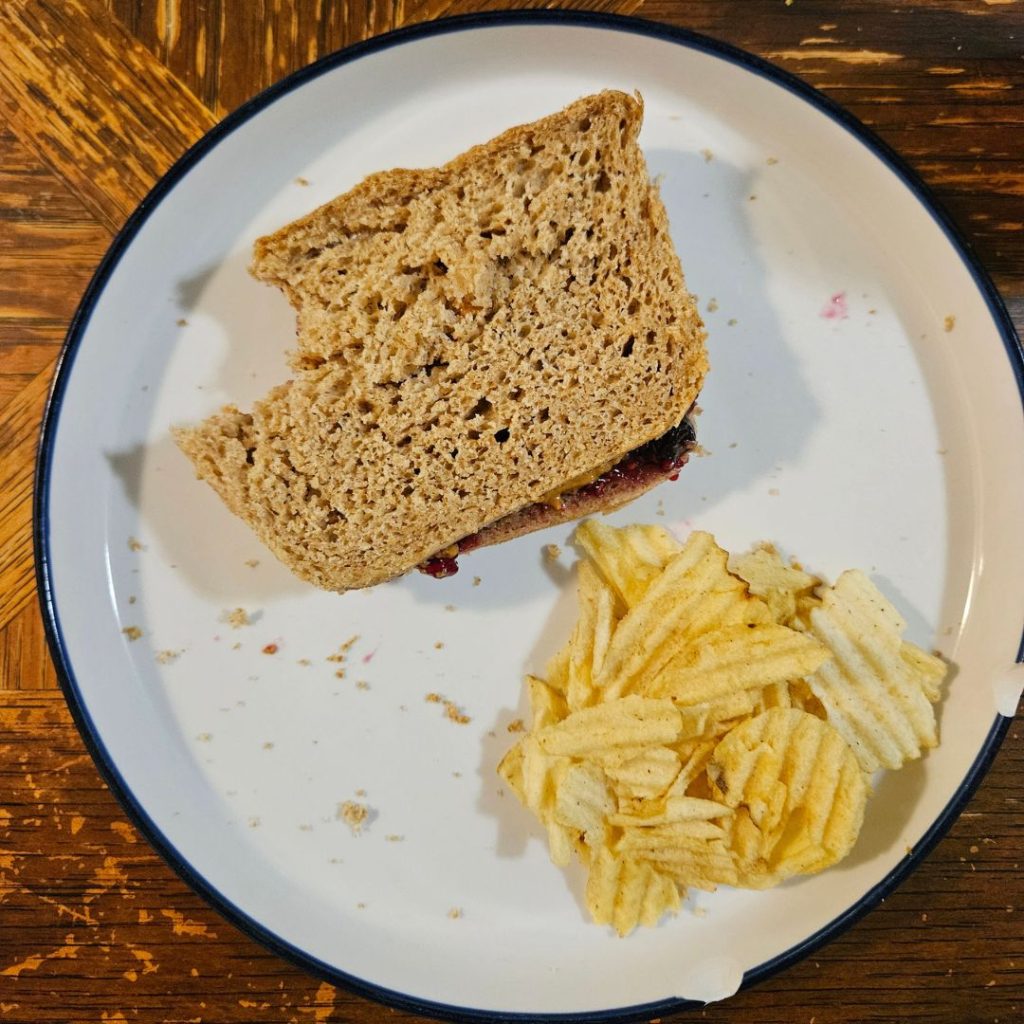
Pb and j sandwiches
Pork enchiladas with rice (I like to use chicken stock to make enchilada sauce. You can also use it as your liquid for your rice! Be sure to use the rest of the cilantro).
Thursday
Baked oatmeal (can top with berries if you’d like!)
Chicken salad sandwiches
Pizza – top with pork and chicken
Friday
Pulled pork breakfast hash – drizzle with enchilada sauce for a kick
Snacky lunch – hard boiled eggs, cheese quesidillas, the last of the produce
Baked ziti with side salad – make ranch dressing using sour cream, seasonings, and water (or milk)
Saturday
Granola cereal
Pork baked potatoes
Pork quesidillas
Shopping List and Estimated Prices
These prices were compiled March 2026 from online sources. Prices may differ based on where you live and when you are shopping. For best prices in your area, do your own research.
For my actual grocery haul, I spent closer to $150. Prices were not consistent in my grocery store with what I found online. Those differences are not reflected in this blog post.
White rice 5 lbs – $3.37
Whole chicken 5 to 7 lbs – $8.47
Potatoes 5 lbs russet – $2.47
Carrots 2 lbs – $2.18
Cabbage – $2.7
Pork butt – 7 to 8 lbs – $14.10
Instant yeast 4 ounces – $5.48
Flour 5 lb bag – $2.38
Frozen mixed berries 3 lb – $10.74
Frozen mixed vegetables 2 lb – $2.36
Peanut butter creamy natural – $3.88
Sugar 4 lbs – $2.97
18 count eggs – $2.47
1 gallon whole milk – $2.92
1 pound butter – $3.44
Grapes – $3.76
Yogurt plain – $2.94
Cilantro – $0.97
Oats rolled oats 42 oz – $4.18
Sour cream 1 lb – $2.64
Maple syrup – $7.98
Corn Tortillas 30 count – $2.44
Tomato paste 12 oz – $3.66
Colby jack cheese 1 lb – $3.58
Ziti noodles – $2.94
1 pound ground beef – $7.23
Ricotta cheese 15 oz – $2.67
Cucumbers – $1.97
Salad greens – $3.98
Bacon – $9
TOTAL – $129.57
My total obviously doesn’t include any spices I used in the cooking process. It also doesn’t include any stock, water, or other common items used in cooking.
The G.O.A.T. – Meal Planning
Meal planning is my go-to way to save money on groceries. But there are two key takeaways I think everyone should incorporate in to their meal planning.
First, plan to eat your leftovers. If the whole point of this meal plan is to cut back on food waste, that means you need to eat your leftovers. Usually, it’s recommended that food stays fresh for about 7 to 10 days in your fridge. So for every week you meal plan, there should be a meal dedicated to leftovers.
Second, everyone should learn to preserve their food in some way.
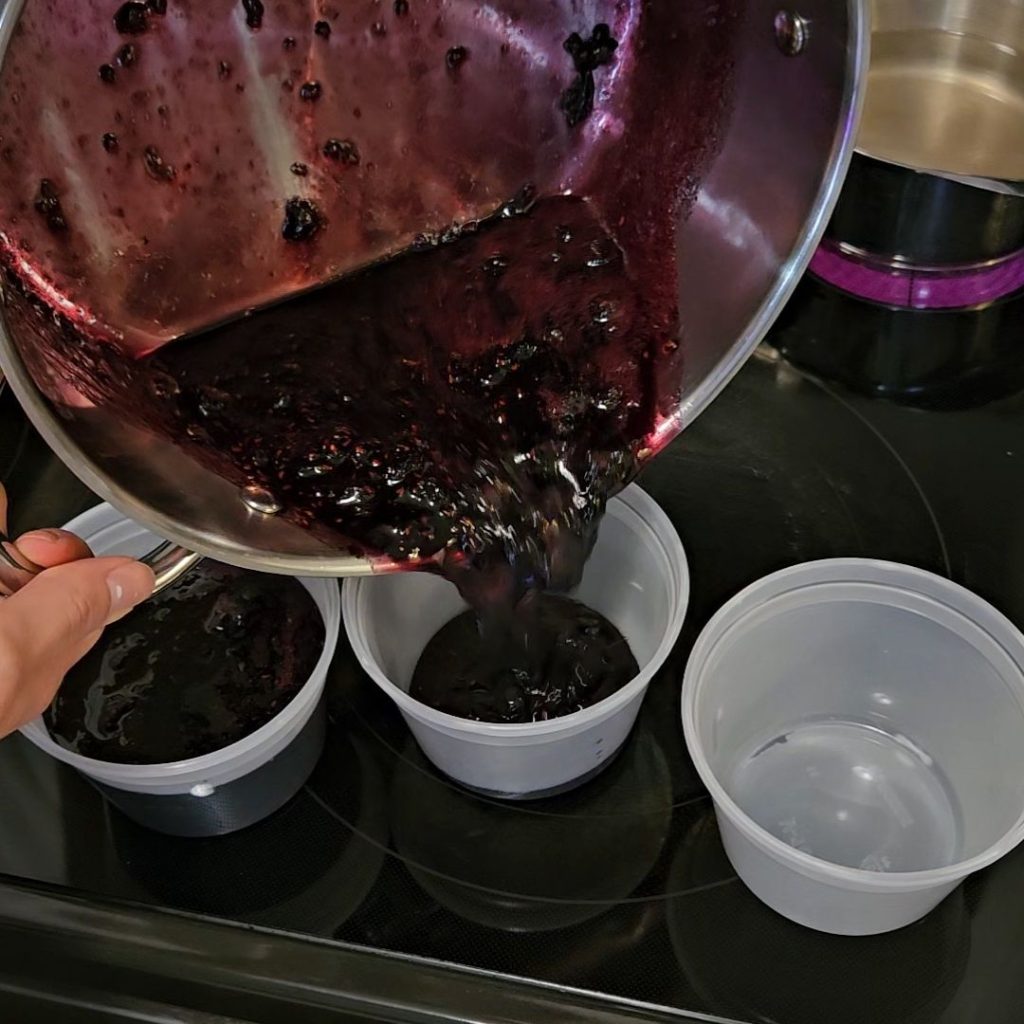
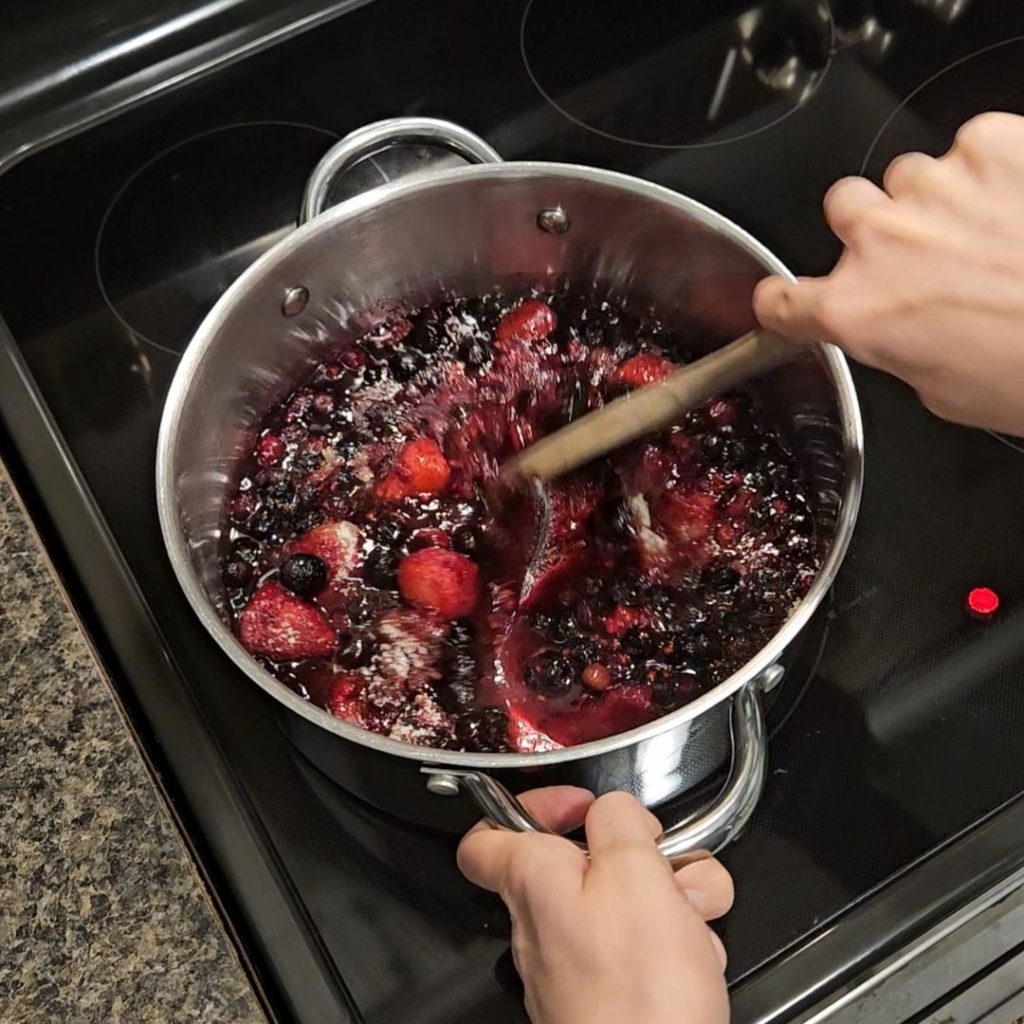
Say you don’t care to eat your leftovers within the week you made them. Instead of throwing them away, use something like these silicone freezer molds to preserve your leftovers for later. If you have individual parts of a meal, like jam or salsa or sauce, learn how to can it so you can enjoy it later.
If you invest in your food preservation, you can also look in to freeze drying your leftovers for even longer, shelf-stable food options.
Pin this post for later!
Photo by The Blowup via Unsplash.
Grocery Shopping Tips
Remember these grocery shopping tips next time you head to the grocery store.
Purchase Affordable Ingredients
I love shopping. But sometimes, the bill is just hard to swallow! That’s why I purchase affordable ingredients.
The best way to knock a few dollars off your grocery bill is to purchase in-season produce. Strawberries cost an arm and a leg in October because the growing season is technically April to May. Even in South America, where a good portion of spring and summer produce is grown, harvested, and shipped from, you won’t see good strawberries start rolling in to your grocery store until April.
This swap may seem controversial. But my affordable shopping hack is to opt for non-organic items over organic. For produce, the “dirty dozen” is usually considered the produce you want to opt for organic options. But if it comes down to organic produce over affording groceries, I will opt for affording the groceries.
Finally, you can opt for off-brand or store-brand products over name brand products.
Purchase Foods You Actually Eat
Anyone can tell you that brown rice and black beans should be a pantry staple for their random health claims. But the people you should be listening to is your family. If you continue to purchase ingredients and your family simple isn’t eating what you prepare, that’s a sign that ingredient isn’t a good fit for your family.
I know that there are seasons for certain types of produce. There are certain ingredients that literally are better for your family’s health. But your family isn’t eating them, it’s not worth wasting the money.
Our family isn’t a fan of peas or green beans. So I don’t make them as a side dish. I don’t buy them to store in my pantry. I will not spend my hard-earned money or limited pantry space on an ingredient my family just doesn’t like.
How to Stock a Pantry On a Budget – Practical Guide
This free guide will walk you through the meals your family eats and why you should stock your pantry for emergencies. It’s the perfect way to stay organized as you plan out a 72-Hour pantry to a monthly pantry.
It ends with an entire page full of frugal grocery shopping tips! Put your email below to get your free guide sent to you right now!
If you want even more ways to save, check out the $5 ebook in the Homemaker and Happy Shop. On top of the meal plans and frugal shopping tips, it has price comparison sheets, a seasonal eating guide, a printable meal plan, and common substitutions you can use when things run low.
Even More Money-Saving Tips!
I created a paid resource for those who want to dive deeper in to smart shopping and food storage. These pages are meant to be written on again and again. So when you purchase your ebook, save the file so you can print out the pages you need!
Head on over to the Homemaker and Happy Shop to purchase How to Stock a Pantry on a Budget!
Leave a Reply