
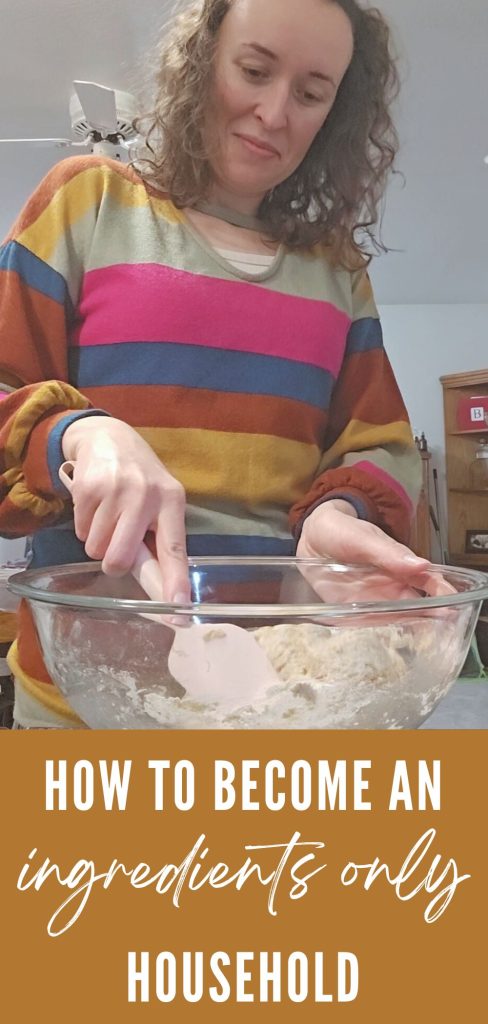
Spoonfuls of peanut butter. A handful of mixed nuts. A handful of dry cereal. These are common snacks in a household with an ingredient focus. If you’re ready to ditch prepackaged foods and their price tag, here is how you become an ingredient household.
Some of my go-to snacks as a mom are fruit trays, cheese and crackers, and if I’m being honest, leftovers.
That’s because we are an ingredient-only household.
Reflecting on my childhood, I realized that my family was also an ingredient household—mainly because we couldn’t afford prepackaged snacks. That early experience shaped how I think about food now.
Nowadays, I’m not willing to pay the prices (both financially and physically) to keep prepackaged snacks on hand. And I’m on a mission to encourage others to ditch the prepackaged snacks as well.
Pin this post for later!
This post contains affiliate links. That means when you click on a link and make a purchase, I make a commission at no extra cost to you. As an Amazon Affiliate, I make an income from qualifying purchases. For more information about my disclosure and privacy policy, visit this page.
Table of Contents
What is an Ingredient Household?
How Do I Become an Ingredient Household?
FREE Guide – How to Stock a Pantry on a Budget
Does an Ingredients Household Cut Down on Food Waste?
What is an Ingredient Household?
An ingredient household is a kitchen made up of ingredients, not pre-made snacks or meals.
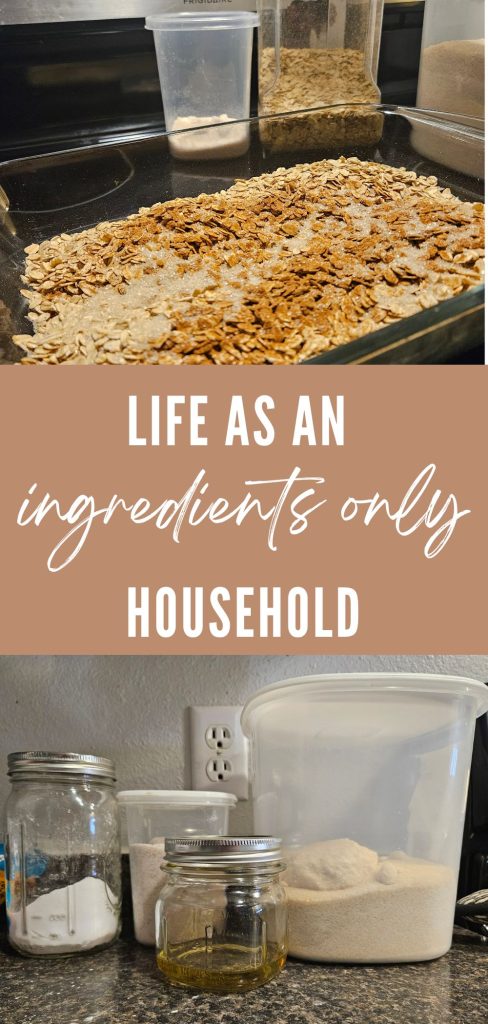
That means instead of granola bars, you have oats, maple syrup, chocolate chips, and other mix-ins on hand. Instead of buying a lasagna from the freezer section, you make one.
The running joke on social media then becomes – what do I get when I get hungry in between meals? That’s where people share their own experiences in eating things like a handful of chocolate chips or a spoonful of peanut butter to tide them over until dinner. That’s truly what’s available!
There isn’t the convenience of reaching into the pantry and grabbing a pouch of applesauce or a mozzarella cheese stick. They aren’t in the pantry and fridge!
That’s what a ready-made household is. Your pantry is full of pre-packaged snacks, and your freezer is full of frozen meals. You already have the meals on hand instead of the raw ingredients that need to be prepared.
Why Ditch Convenience Foods?
These price comparisons were made in February 2026 for Arkansas. Take that into consideration. Prices may vary based on where you live and when you are purchasing groceries.
A pack of name-brand, fruit-flavored gummy snacks from my local grocery store contains sunflower or vegetable oils (the ingredients list doesn’t specify, it just lists them both), carnauba wax, and corn syrup. I want to avoid those things in my kids’ snacks.
My homemade gummy snacks are made of fruit juice and beef gelatin. I sometimes don’t even put sugar in my gummy snacks! If I do, because I am making them at home, I can opt for things like maple syrup, honey, or organic cane sugar. These are sugars I use all the time in my own cooking, so I use them because I’m familiar with them.
Poor ingredients are the core reason behind why I make my children’s snacks. Cost savings is another.
When I buy baking goods in bulk, I am buying enough to span several recipes for a period of time. I’m very rarely buying one-off ingredients.
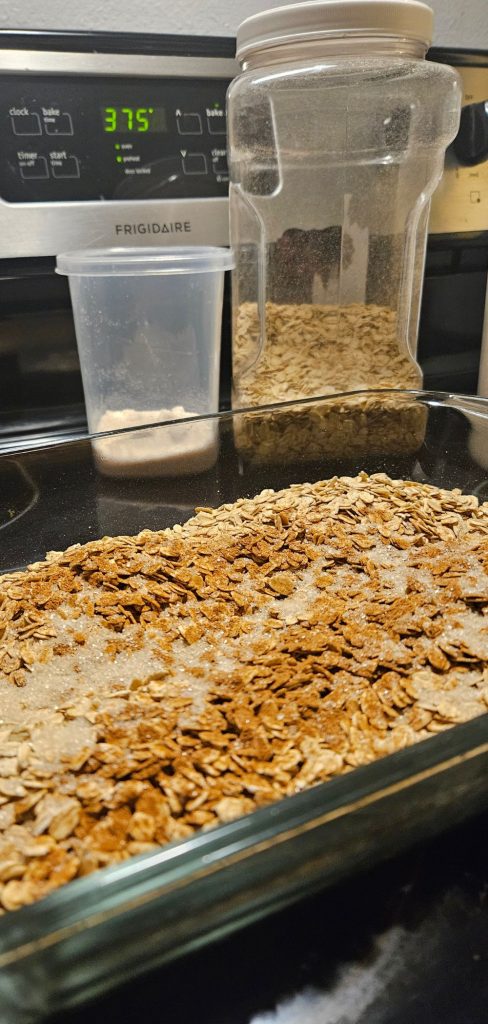
For example, I am buying enough oats to make things like granola, baked oatmeal, and granola bars. As a bonus, I am simultaneously building a pantry of things that I can pull from again and again and again.
So when I think about the cost of a chocolate chip granola bar, I know that I am spending more money up front to buy a whole bag of chocolate chips, but only a fraction of that will truly go into a granola bar.
The same goes for oats. A 42-ounce container of store-brand old-fashioned oats from my grocery store is $4.18. A family pack of 0.84-ounce granola bars (24 in the package total) is $4.42.
Yes, you are buying the product already made. Yes, it has the chocolate chips already in it. But we need to consider how many more granola bars we can make with the oats we bought. Our cost savings can be much more when we make something like granola bars ourselves.
Pin this post for later!
When the Math Doesn’t Work
A 12-pack of store-brand applesauce pouches from my local grocery store is $6.78. They are 3.2 ounces per pouch. They are about $0.57 per pouch. That’s not bad for a convenience food item!
Total, you are getting 38.4 ounces of applesauce within all of those pouches. That’s about 5 cups of applesauce. Remember that – we still need to make our own applesauce!
Instead of buying premade applesauce pouches, I invest in a baby food pouch squeeze station that will let me create my own food and fill pouches for $30 on Amazon. Let’s set that $30 aside and look at what it would cost to purchase just the pouches and apples. I don’t want to forget that we made that investment. I want to compare apples to apples (hah! Get it?)
A 50-pack of the same brand, single-use baby food pouches is $24.99. However, these pouches are 4 ounces each. Even though each pouch is $0.50, you are automatically getting more product per pouch.
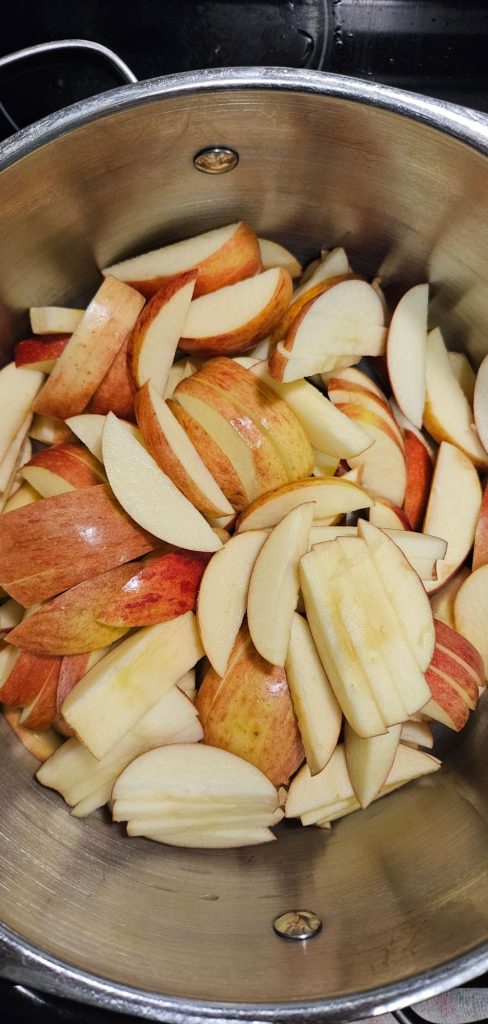
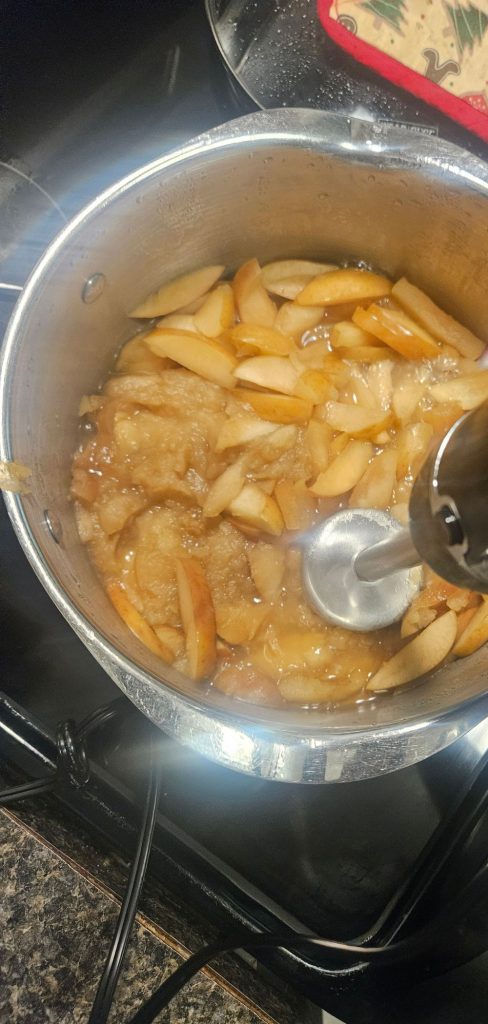
An estimated 2 pounds of apples makes 5 cups of applesauce, so I grab a 3-pound bag of store-brand Gala apples from my grocery store for $2.38. At $0.79 per pound, I will spend $1.58 on the apples in my homemade applesauce. I will not calculate the cost of the one cup of water I need to stew my apples on the stovetop.
We need to add the cost of applesauce to what our homemade pouches are. This isn’t going to be a direct comparison because the size of our pouches is different. But we know that we can make about 10, 4-ounce packages with 38.4 ounces (or 5 cups) of applesauce.
That $1.58 cents split 10 ways is $0.14 per pouch. That brings our total cost of homemade pouches to $0.64.
If we were to compare the cost of homemade pouches to name-brand pouches, we are consistent in price at $0.64.
Unfortunately, we didn’t beat the grocery store on price. But we did beat them on quantity. I now have 40 additional pouches to make things like yogurt pouches, pudding pouches, or other baby food pouches.
How Do I Become an Ingredient Household?
A great way to kick-start your journey as an ingredient household is to remember your why.
Sure, cooking things from scratch usually lets you create larger dishes for less money. But the random little ingredients that now populate your pantry aren’t going to cook themselves!
That’s why it’s also important to commit yourself to learning how to cook. You will try and fail. There will be a recipe your family doesn’t enjoy, and you will have to choke down a snack or two. But as you grow in knowledge, both in how to prepare food and what your family enjoys, your confidence will grow, too.
Because your family has its own preferences, you should cook what you enjoy! Some dry beans, sacks of rice, and a few cans of coconut cream are only beneficial if your family actually eats them.
Arguably, buying and preparing what your family actually eats should be at the top of this list!
Finally, you need to ask yourself if the effort you put into the product is worth it. If you aren’t paying with your money for a product, you’re paying with your time.
Knowing that, that means you need to set aside the time for meal and snack prep to become an ingredient household. It takes time to meal plan and create this delicious food. Set aside a few hours every week to make it happen!
Another great tool to have in your tool belt is how to reheat leftovers. Did you know that you can reheat leftover spaghetti in a pot of boiling water? In fact, it’s the best way to reheat it!
Little tricks like that help you to remove the stigma surrounding leftovers. Leftover food isn’t bad. It’s the way it’s being prepared that makes it unappealing.
If your nose scrunches at the thought of leftovers (no judgment here), work on those feelings first. Where are they coming from? A good steward stewards her resources well. Even leftovers!
If you work hard to make just enough food for your family so that you don’t have to eat leftovers, that’s work you should be proud of. But if you are here to make a dollar stretch and you’re okay with trashing perfectly good food, you might want to have a long conversation with yourself (and your check book) about why you spend (and waste) so much money on food.
Your next snack doesn’t have to be chunks of cheese or handfuls of chocolate chips.
I share a few of my favorite meals in my email newsletter! Be sure to subscribe to stay up to date on your favorite meals and kitchen hacks.
When you sign up below, you’ll also get a copy of my FREE guide “How to Stock a Pantry on a Budget.”
Kitchen Gadgets I Recommend
When you are creating home-cooked meals and snacks several times a day, it can be overwhelming! Luckily, there are a few kitchen tools you can invest in that make life easier (and fun!).
I personally love making my own yogurt tubes with these popsicle molds. I also love making dips and snack cups in these small, plastic baby food containers. I love that I can start using them for homemade baby food, but they easily grow with my children to hold raisins, sweets, and other snacks as we are on the go.
For even more recommendations, check out my Amazon Storefront!
Related Blog Posts
Finding your rhythm as an ingredients-only household may take time. Here are a few of my homemaking hacks to make the transition that much smoother.
Strategies and Tips for Mastering Meal Prep
Easy (and Cheap) Ways to Stock a Pantry on a Budget
20 Kitchen Skills Every Homemaker Should Know
What About Complete Meals?
A true ingredients-only household makes everything from scratch. But that’s simply not reasonable if you’re just starting out or in a busier season of life.
That’s something for you and your family to balance! The goal might be to create meals from scratch. But when you need to buy a bottle of salad dressing because you forgot to make some yourself, it isn’t the end of the world.
You can also draw a boundary for your family. Say that you don’t make your own dressings and condiments, but you prepare your own fruit and vegetable trays. Take a look at what might be impacting your budget or your time the most and go from there.
Does an Ingredients Household Cut Down on Food Waste?
Being an ingredients household does not mean you will cut down on food waste. Why? You have to make sure you are eating the food you bring into your home.
You can buy oats in bulk and feel great about it. But if you don’t cook the oats and end up trashing them when they go bad, you are throwing that money away.
In this economy, I am doing absolutely everything I can to combat food waste. We consistently eat leftovers. But I am also shopping my fridge, freezers, and pantry before I go to the grocery store.
When I do this, I will sometimes pull ingredients that need to be used out of the pantry and keep them on my counter. I am sending the message to myself that this food must be used! When we eat it, it leaves the counter.
Rolling your pantry over like this makes you not waste anything, but it also makes sure nothing gets lost. Sometimes I find a lone can of mushrooms or a box of forgotten pasta. Be sure you are combing through your pantry every once in a while!
Leave a Reply